
How long does landscaping installation take? A professional crew can build a standard 12×16-foot deck with a small set of steps in about one week.
A larger multi-level deck can run to a month. The planning and permits before that often add weeks of their own, so your landscaping project timeline is longer than the days a crew spends in your yard.
Here are the numbers that hold up, what stretches a schedule, and how to get a start-to-finish plan from your installer in writing.
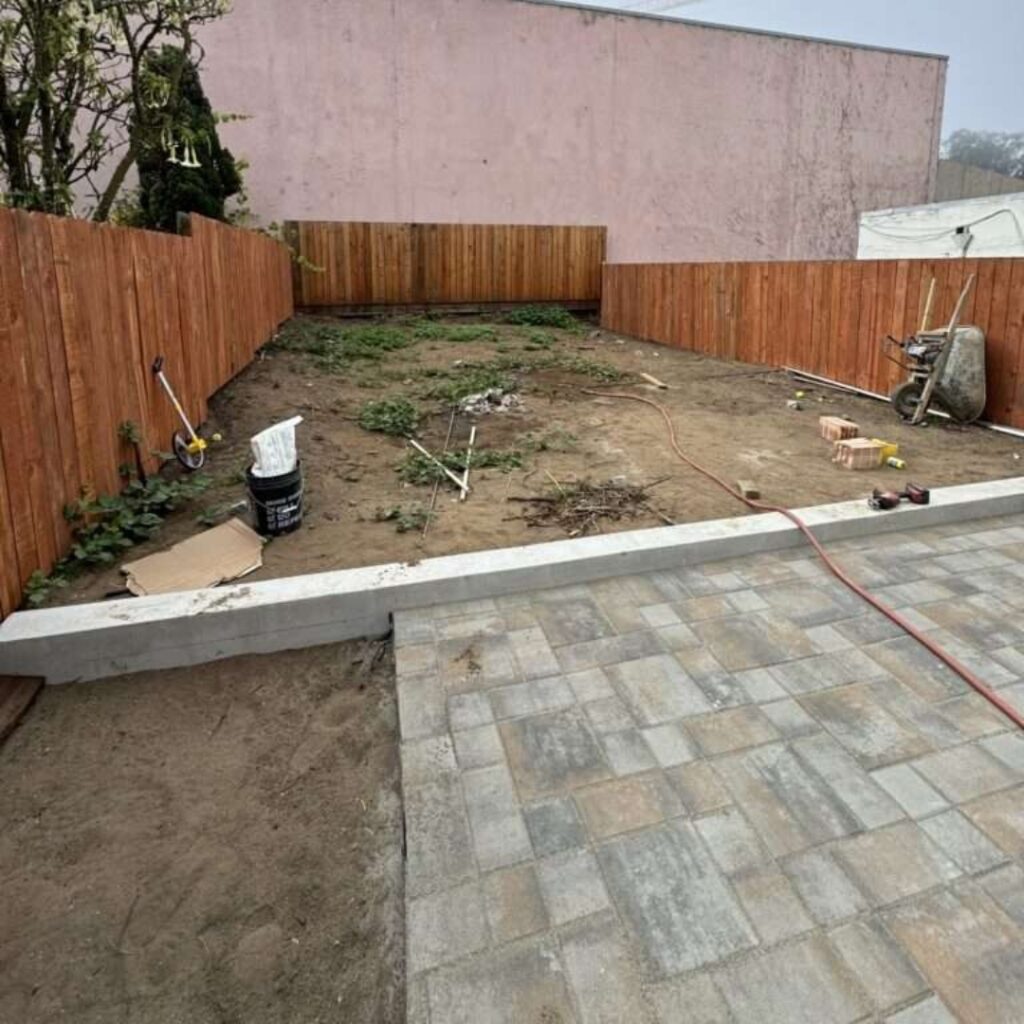
How long does landscaping installation take for common projects?
Crew time is counted in hours or days, and the calendar in weeks. Bob Vila’s paver patio guide estimates 35 to 40 hours for a professional to finish a 300-square-foot patio, and 40 to 50 hours for a DIY job.
For decks, Decks.com’s guide to timing a deck build gives the build times in the table below.
| Project | Build time | What the time covers |
|---|---|---|
| Paver patio, 300 sq ft | 35 to 40 hours of labor | A professional crew doing the patio itself |
| Standard 12×16 deck with small steps | About one week | A professional crew, build only |
| Larger multi-level deck with extras | Up to one month | A professional crew, build only |
Treat these as examples, not promises. Labor time varies with location, experience and complexity, so a custom layout on a tricky site won’t land on the same number as a plain rectangle.
The paver patio installation time in the table is also hours of labor, not days on the calendar. Weather, inspections and the crew’s other jobs decide how those hours spread across your weeks.
Adding it up for a whole yard
A full yard rarely means one project. A patio, a fence and new turf each have their own prep, their own stages and their own inspections, so the question of how long does landscaping installation take for a whole property is really a question about sequence.
Stages that depend on each other can’t overlap. Grading has to finish before a base goes in, and a base has to be compacted before anything sits on it. Work that doesn’t depend on the rest, like a fence along the far boundary, can sometimes run alongside.
That’s why a written landscaping project timeline beats a single total. Ask for the order of work, and you’ll see which parts of the plan can’t be rushed.
Why planning and permits stretch the calendar
Most of the waiting happens before anyone digs. Decks.com advises planning a project at least several weeks ahead, sometimes several months, and says permits alone can take weeks.
Whether you need one depends on what you’re building, and permit time is separate from the deck build time in the table above. In Daly City, the city’s own fence permit FAQ says a fence that stays within the six-foot height limit doesn’t need a permit.
A taller fence, or a wall that holds back soil, is a different conversation, and it belongs with the city’s Building Division before you pick a start date. If your yard slopes, our guide to hillside erosion control with terracing, planting and drainage shows why those walls need thought early.
Ground prep is where schedules slip
Preparing the ground can take almost as much time as laying the pavers, Bob Vila says. Fixing a slope or a dip may call for heavy equipment, and that adds days before the first paver goes down.
It’s the least visible part of a job and the part an owner is most likely to underestimate. A fast quote that skips prep is a fast quote for a patio that settles. Our concrete paver installations start with the base for exactly that reason.
What artificial turf installation involves, step by step
Turf has no single timeline that fits every yard, because most of the work is preparation. This Old House lays out the artificial turf installation steps in six stages, and four of them happen before the turf goes anywhere near the ground.
- Remove the existing grass to a depth of at least 3 to 4 inches.
- Grade and level the ground, adding or removing soil, then compact it with a plate compactor.
- Lay a base of crushed stone or decomposed granite, 3 to 4 inches deep, compacted in several directions.
- Install weed barrier fabric and secure the edges.
- Position the turf, stretch it taut, nail it down, then seam, trim and brush it.
- Spread infill in sections and brush it into the fibers.
The same guide suggests unrolling turf and letting it sit in the sun for half a day to reduce wrinkles, so even the laying stage has a built-in pause.
When you ask an installer for a schedule, ask how many days each of those stages gets. That one question separates a crew that has done this from one that is guessing. You can see how we handle it on our artificial turf page.
How long does landscaping installation take to get on a crew’s calendar?
Often longer than the job itself. Decks.com says good contractors can be booked six to nine months out, and in some cases twelve months or more.
Winter tends to be slower for builders, and some offer pre-season incentives. Starting a deck in mid-to-late summer, the same guide warns, can mean waiting until the next season to use it.
Season shapes the ground, too. The same guide notes that spring usually brings more rainfall, which can saturate topsoil, while wet clay subsoil may actually be easier to dig. Either way, ask how your installer handles a rain day, because the base stage is the one that can’t be rushed.
That advice comes from deck builders, but the logic carries to any outdoor build. A busy crew fills its calendar ahead of the good weather, so the owner who calls in spring is competing with everyone else who decided at the same time.
If you’re still choosing between materials, our comparison of wood and composite decking in the Bay Area is worth reading before you book, since the choice can change the order and the build.
What happens after the crew leaves
The job isn’t finished the day the last tool leaves your yard. We return after 30 days to ensure everything is thriving and operating smoothly, so plan for that visit when you picture the finish line.
New plantings and fresh ground need time to settle in, and that follow-up is when small problems get caught. For the months after install, our seasonal landscape maintenance schedule for Bay Area properties shows what the yard needs next.
Questions to ask for a schedule you can plan around
So how long does landscaping installation take on your property? A date alone won’t tell you, so get the whole sequence in writing.
- Which stages does the job include, and how many days does each one get?
- Does any permit or city approval come before the start date, and who handles it?
- What happens to the schedule if the weather turns on a prep day?
- When is the follow-up visit?
Our guide to choosing a landscaper in the Bay Area covers the other questions worth asking before you sign anything.
Once you’ve got those answers, set a realistic landscaping project timeline and hold the installer to it. If you want a timeline for your own yard, you can request a free estimate and we’ll walk through the stages with you.
Frequently asked questions
Do I need a permit for a fence in Daly City?
Not if it stays within the six-foot height limit, according to the city’s fence FAQ. Anything taller, or any wall that holds back soil, is worth checking with the Building Division first.
Is it faster to do the work myself?
Not for a patio. The labor estimates for a 300-square-foot paver patio run higher for a DIY job than for a professional crew, and a homeowner also has to line up the equipment.
How far ahead should I plan before landscaping installation starts?
At least several weeks, and sometimes several months. Permits alone can take weeks, and a sought-after crew may be booked well into the future.
Sources
- Paver Patio Cost — Bob Vila
- Best Time to Build a Deck — Decks.com
- How to Install Artificial Grass — This Old House
- Fences FAQ — City of Daly City